Construction
Cold-Formed Steel
October 12, 2022
Cold-Formed Steel (CFS) Framing
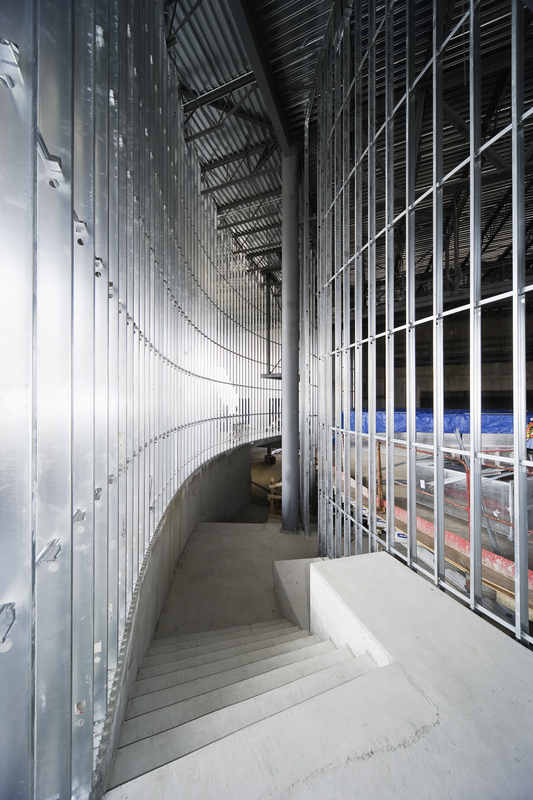
Cold-formed steel (CFS) framing is produced by rolling or pressing steel sheet at room temperature into structural shapes: most commonly C-studs, track, joists, and rafters. Unlike hot-rolled structural steel, CFS members are thin-walled and lightweight, yet highly effective in the right applications.
CFS is the standard framing material for interior partitions in commercial buildings and is increasingly used for exterior load-bearing wall systems, especially in mid-rise construction where wood is limited by building codes and hot-rolled steel is oversized for the loads involved.
Structural vs. Non-Structural Applications
Non-structural CFS (often called light-gauge or drywall framing) is used for interior partitions, shaft walls, and ceilings. Member thicknesses range from 18 to 25 gauge. While these members carry their own weight and resist minor lateral forces from air pressure, they are not designed to transfer floor or roof gravity loads.
Structural CFS (thicker gauge: 12 to 16 gauge typically) is designed to carry axial, bending, and shear loads. Structural CFS walls can carry multiple stories of gravity load and serve as lateral shear walls when properly detailed with hold-downs, anchorage, and sheathing.
Mid-Rise CFS Construction
CFS load-bearing systems are increasingly popular for 4- to 8-story residential and mixed-use buildings. Prefabricated CFS wall panels can be assembled off-site and craned into position, improving schedule and quality control. Combined with concrete podium decks below and light-frame above, CFS structures offer an economical and code-compliant path to mid-rise density.
Engineering Considerations
CFS design follows AISI S100, the North American Specification for the Design of Cold-Formed Steel Structural Members. Key considerations include local and distortional buckling of thin walls, member connectivity (screw patterns, weld schedules), and proper load path continuity through the framing system.
Deflection limits are critical in CFS stud walls supporting brittle finishes like brick veneer or stucco. We size members not just for strength but to limit out-of-plane deflection under wind load: typically L/600 or tighter for veneer applications.
Fire resistance is a major advantage of CFS over wood: it is non-combustible and satisfies IBC requirements for Type I and II construction. However, CFS loses strength rapidly at elevated temperatures, so fire-rated assemblies require gypsum board protection on both faces.
Ready to Talk Through Your Project?
Frontier Structural Engineering brings 20 years of commercial and residential design experience to projects across Colorado and California. Whether you're in schematic design or already in the field, we're available.
☎ Call 719 247-2928