Construction
Concrete Masonry Unit (CMU)
November 11, 2022
Concrete Masonry Unit (CMU)
Concrete masonry units (commonly called CMU or concrete block) are the dominant structural masonry material in contemporary commercial construction. Manufactured from Portland cement, aggregates, and water, CMU blocks are produced in standardized nominal sizes (most commonly 8"×8"×16") with cores that run through their height. Those cores accept vertical reinforcing bars and grout, transforming what is otherwise a relatively weak unreinforced unit into a heavily reinforced structural wall system capable of carrying significant gravity and lateral loads.
CMU walls are fire-rated, sound-attenuating, and require little maintenance once constructed. They are the default wall system for schools, hospitals, retail tilt-up buildings, and any commercial or industrial project where fire separation, durability, and cost efficiency are priorities.
Unit Types and Strengths
CMU units are classified by density (normal weight ~135 pcf, medium weight ~115 pcf, lightweight ~105 pcf) and compressive strength. Standard units have a net area compressive strength (f’m) of 1,500 to 2,000 psi for typical applications; special high-strength units reach 3,000 psi and beyond. Lighter units improve thermal performance and reduce the load on the structure below.
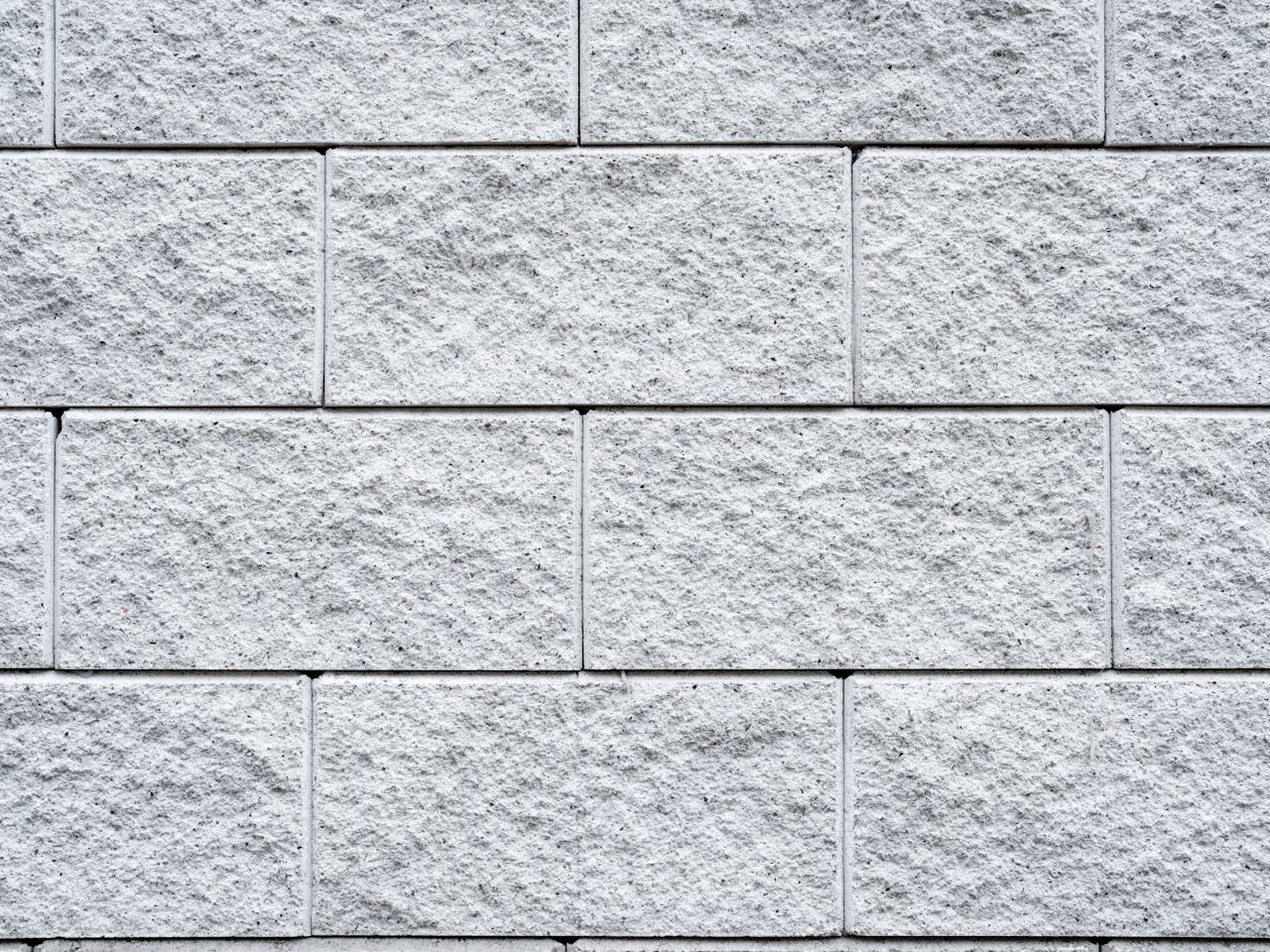
Specialty units include knock-out bond beams (for continuous horizontal reinforcing), lintel blocks (U-shaped for spanning openings), and split-face units (with a rough texture for exposed architectural finishes). Glazed CMU provides a hard, cleanable surface for commercial kitchens, locker rooms, and corridors.
Reinforced and Grouted CMU
The real structural capability of CMU comes from the combination of vertical reinforcing (typically #5 or #6 rebar at 32" or 48" on center) and horizontal reinforcing in bond beam courses (typically every 4 feet vertically). All cells containing vertical reinforcing are filled with grout: a flowable, high-slump concrete mix designed to fill the cores and encapsulate the steel.
Fully grouted walls are stronger and heavier; partially grouted walls are more economical but limit the achievable design strength. The engineering decision depends on the applied loads and the required shear and flexural capacity.
Seismic and Lateral Design
In seismic design categories C through F, reinforced masonry shear walls must meet special detailing requirements per TMS 402. Boundary elements at wall ends, minimum reinforcing ratios, and maximum shear stress limits govern the design. The ductile behavior of a well-reinforced CMU shear wall can dissipate significant seismic energy: a critical advantage in high-seismic regions.
Engineering Considerations
CMU shrinks over time as moisture cures from the units. Control joints at 25-foot spacing or at significant geometric discontinuities accommodate this shrinkage and prevent random cracking. Lintels (precast, CMU lintel blocks, or steel angles) span openings and must be sized for both construction loads (before the masonry above develops arching action) and in-service loads.
Ready to Talk Through Your Project?
Frontier Structural Engineering brings 20 years of commercial and residential design experience to projects across Colorado and California. Whether you're in schematic design or already in the field, we're available.
☎ Call 719 247-2928