Construction
Metal Decking
October 13, 2022
Metal Decking
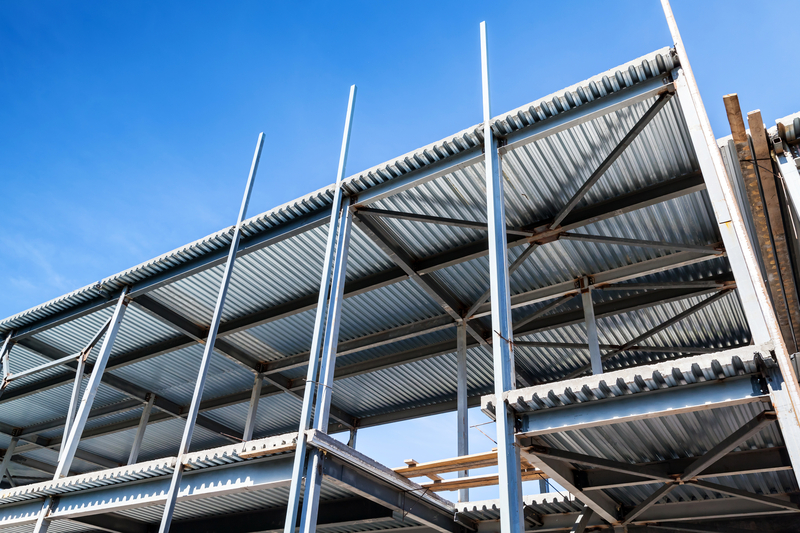
Metal decking (corrugated or ribbed steel sheets) is one of the most versatile and widely used components in commercial and industrial steel construction. Attached to the top flanges of beams and joists, deck provides the structural platform for concrete floors and roofing systems while also functioning as the lateral load-resisting diaphragm of the building.
Deck is specified by type, rib depth, gauge, and coating. It’s available from multiple manufacturers and is typically selected to meet both load-carrying requirements and diaphragm capacity demands from wind or seismic forces.
Roof Deck vs. Floor Deck
Roof Deck is used in low-slope and flat roof assemblies. It supports insulation, membrane, and ballast but typically does not carry a structural concrete topping. Roof deck profiles include 1½" (Type B, the most common), 3", and deeper options for long spans. Roof deck diaphragms are designed to transfer wind and seismic loads back to the lateral system.
Form Deck acts as a stay-in-place form for a concrete slab and carries construction loads during the pour. Once the concrete cures, the deck is not composite with it: the slab carries all loads independently. Form deck is often used for slabs on grade or where slab thickness allows.
Composite Deck (also called structural deck) works together with a concrete topping slab after curing. Shear studs welded through the deck to the top flange of the supporting beam bond the two materials together. This composite action increases beam stiffness and strength significantly, allowing lighter or shallower beams for the same span.
Diaphragm Behavior
Metal deck diaphragms are a critical part of every steel building’s lateral system. The deck, fastened to the framing with puddle welds or power-actuated fasteners, spans between beams and transfers in-plane shear forces to the lateral frames or shear walls. Diaphragm capacity depends on the deck profile, gauge, span, and attachment pattern: all engineered to meet SDC requirements and code demands.
Engineering Considerations
Deck selection depends on span conditions, gravity loads, construction loads, and lateral demands. We coordinate deck layout early in design to resolve diaphragm chord and collector forces and ensure the deck-to-framing attachment achieves the required shear capacity. Special attention is given at openings, re-entrant corners, and diaphragm discontinuities where demand concentrations occur.
Ready to Talk Through Your Project?
Frontier Structural Engineering brings 20 years of commercial and residential design experience to projects across Colorado and California. Whether you're in schematic design or already in the field, we're available.
☎ Call 719 247-2928