Construction
Minimum Depth
October 5, 2022
Achieving Minimum Structural Depth with Concrete
In multi-story construction, every inch of structural depth costs floor-to-floor height, which translates directly to building cost, facade area, and rentable space. Concrete’s versatility makes it uniquely capable of achieving minimum structural depth while maintaining the spans, loads, and performance required.
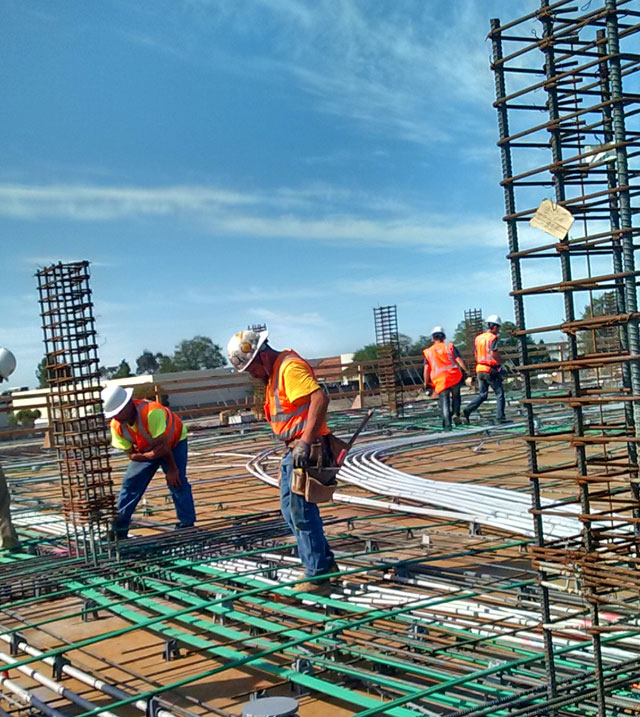
Post-tensioned flat plates and flat slabs are among the thinnest practical floor systems available. By applying a pre-compressive force through tensioned cables embedded in the slab, structural depth can be dramatically reduced compared to conventional reinforced concrete systems.
Design Strategies
- Post-tensioned flat plates: Typically 7–10 inches for residential and office spans
- Flat slabs with drop panels: Additional punching shear capacity at columns
- Band beams: Shallow, wide beams that carry load without reducing headroom
- Voided slabs: Hollow cores reduce self-weight while maintaining stiffness
Engineering Precision
Minimizing depth requires careful analysis of deflection, vibration, and punching shear. Frontier Structural Engineering specializes in optimizing concrete floor systems to deliver the thinnest practical structure for your project’s loads and spans.
Ready to Talk Through Your Project?
Frontier Structural Engineering brings 20 years of commercial and residential design experience to projects across Colorado and California. Whether you're in schematic design or already in the field, we're available.
☎ Call 719 247-2928