Construction
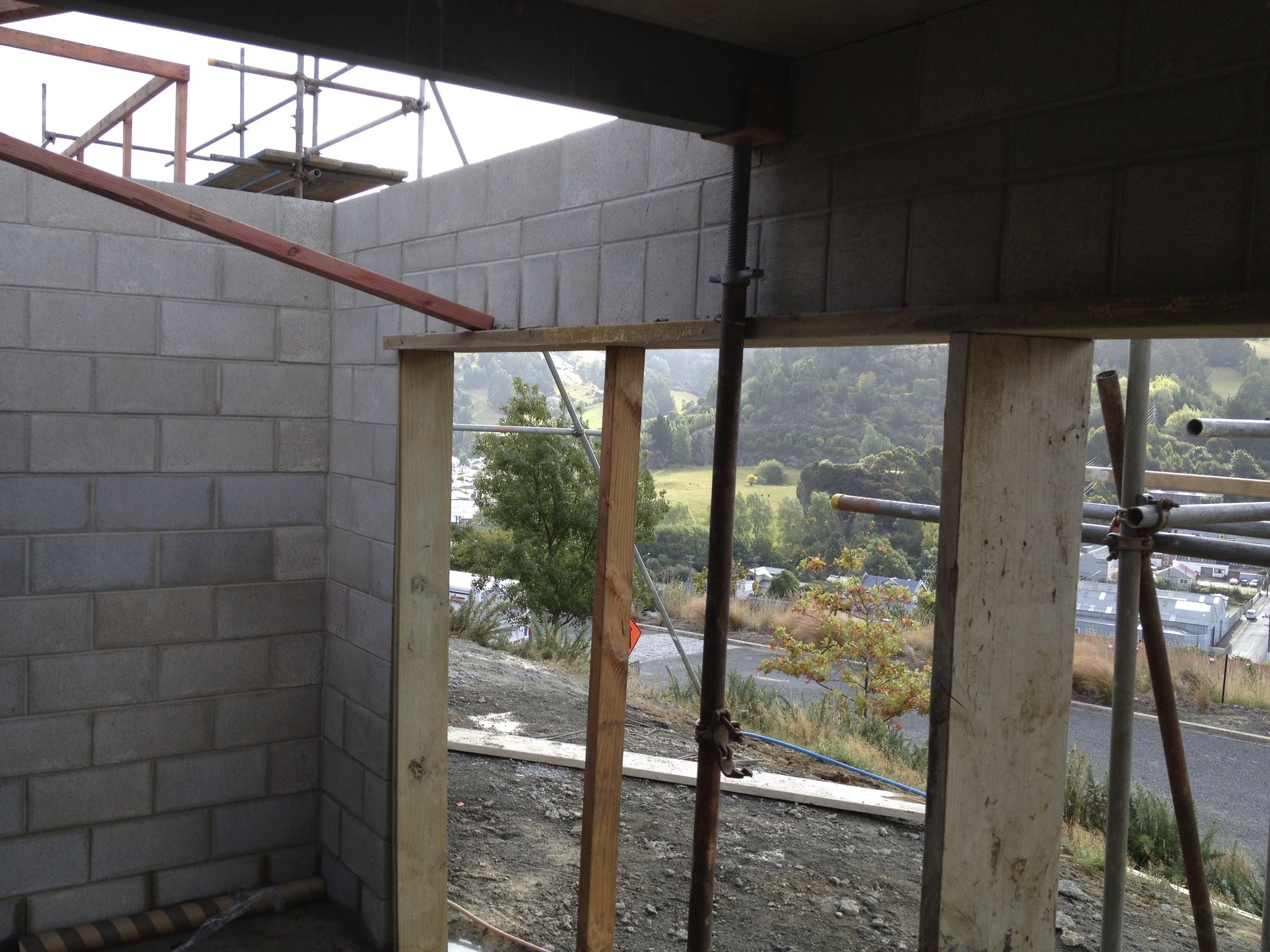
Reinforced Masonry
November 12, 2022
Reinforced Masonry
Reinforced masonry combines the ancient durability of masonry construction with the tensile strength of embedded steel reinforcing. The result is a composite structural system that can carry flexural loads, resist seismic and wind forces, and provide the long-term performance of masonry while overcoming its inherent weakness in tension.
Modern reinforced masonry is designed in accordance with TMS 402 (Building Code Requirements and Specification for Masonry Structures), which governs both allowable stress design (ASD) and strength design approaches for brick and CMU systems.
Why Reinforcing Is Needed
Plain (unreinforced) masonry has excellent compressive strength but almost no tensile capacity. When a wall bends under wind load, the tension side of the wall is carried entirely by the mortar-to-unit bond, which is weak and unreliable as a primary structural mechanism. Earthquake ground motion generates in-plane shear and out-of-plane bending simultaneously. Without reinforcing, unreinforced masonry walls fail suddenly and without warning. This is why unreinforced masonry construction is prohibited or severely restricted in moderate and high seismic zones.
Vertical reinforcing bars placed in the grouted cores of CMU walls (or between wythes of multi-wythe brick) provide tensile capacity. Horizontal reinforcing in bond beams ties the wall together and provides the lap splice locations for vertical bars. Together, they convert a brittle, compression-only system into a ductile, composite one.
Design Approaches
Allowable Stress Design (ASD) maintains stresses in the masonry and steel below allowable limits under service-level loads. It is the traditional approach and remains widely used for low-rise and simple structures.
Strength Design calibrates section capacity against factored loads with explicit ductility considerations. It is required in higher seismic zones and for structures that need to be designed for specific performance objectives.
Prescriptive Design (for small, low-load structures) allows simplified reinforcing schedules based on building type, height, and SDC: useful for sheds, accessory structures, and small commercial buildings.
Special and Ordinary Reinforced Masonry Shear Walls
TMS 402 defines Ordinary Reinforced Masonry Shear Walls (ORMSW), Intermediate Reinforced Masonry Shear Walls (IRMSW), and Special Reinforced Masonry Shear Walls (SRMSW) based on the level of seismic detailing. Special walls require closer spacing of reinforcing, minimum shear reinforcing, and limits on unit types and grout placement. These classifications determine which seismic design categories a masonry lateral system can be used in.
Engineering Considerations
Connection of reinforced masonry to the concrete foundation below and to the diaphragm above is critical. Dowels must be properly embedded and lapped into the wall verticals. Diaphragm-to-wall connections (through anchor bolts cast into bond beams) must transfer the diaphragm shear to the wall without bending the bolt at the masonry face.
Inspection of masonry construction is required by code for structural applications. Special inspection confirms that the correct unit types, mortar, grout, and reinforcing are installed in the sequence and manner shown on the structural drawings. This is not optional. Masonry quality is highly dependent on workmanship, and inspection is the primary quality assurance mechanism available to the engineer.
Ready to Talk Through Your Project?
Frontier Structural Engineering brings 20 years of commercial and residential design experience to projects across Colorado and California. Whether you're in schematic design or already in the field, we're available.
☎ Call 719 247-2928