Construction
Shotcrete
November 2, 2022
Shotcrete (Pneumatically Applied Concrete)
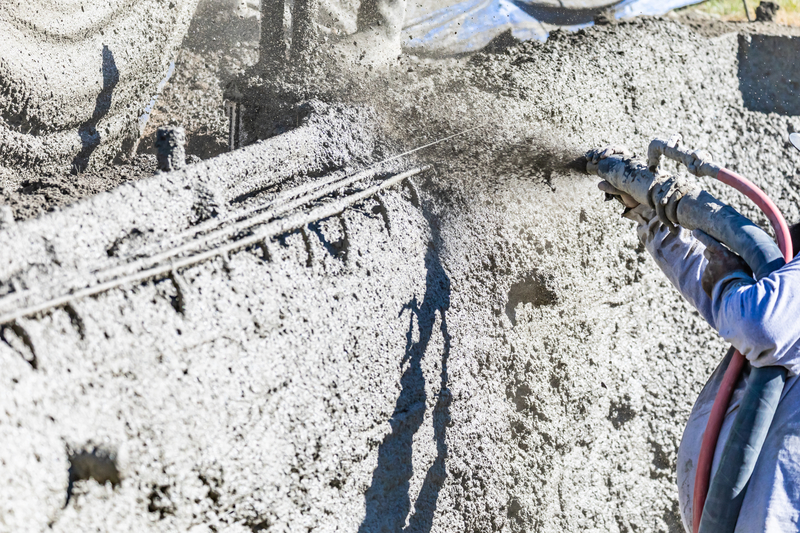
Shotcrete is concrete or mortar conveyed through a hose and pneumatically projected at high velocity onto a receiving surface. Because it is applied without conventional formwork, shotcrete conforms to virtually any shape: curved walls, irregular rock faces, and complex three-dimensional profiles that would be costly or impossible to cast conventionally.
Despite the different placement method, hardened shotcrete is structurally equivalent to conventionally placed concrete of the same mix design and achieves comparable compressive strengths, often in the range of 4,000 to 6,000 psi. Its unique application method and placement characteristics make it the preferred material for a wide range of civil and structural applications.
Wet Mix vs. Dry Mix
Wet-mix shotcrete premixes all ingredients (including water) before pumping through the hose. Water-cement ratio is controlled at the batch plant, resulting in consistent mix quality and lower dust. Wet-mix is more common today and is preferred for larger projects and high-production applications.
Dry-mix shotcrete (gunite) transports dry ingredients to the nozzle, where water is added at the point of application. The nozzle operator controls the water-cement ratio, giving skilled operators flexibility for variable conditions. Dry-mix produces very low rebound (material that bounces off the surface) in the right hands, and historically “gunite” was the term used for pool construction.
Applications
Retaining Walls and Slope Stabilization: Shotcrete is applied over soil nails, rock bolts, or soldier piles to create a facing that transfers lateral earth pressure. It bonds to irregular rock and soil surfaces without requiring the construction of formwork in often inaccessible terrain.
Swimming Pools and Water Features: Gunite pools have been built for decades using dry-mix shotcrete. The shotcrete forms the structural shell; finish plaster is applied over it. The material is durable, watertight when properly placed, and capable of complex free-form shapes.
Tunnel Linings and Underground Construction: In tunneling, shotcrete is the primary initial ground support method. It is sprayed onto freshly excavated rock or soil faces within hours of excavation to prevent raveling and stress-induced spalling.
Structural Repair and Rehabilitation: Deteriorated concrete in bridges, parking structures, and buildings can be repaired with shotcrete after removing the damaged material. Properly bonded to the existing substrate, shotcrete restores both section capacity and durability.
Seismic Retrofit: New shear walls can be created in existing buildings by spraying shotcrete over reinforcing bars attached to the existing structure. This method avoids the need for formwork access in tight spaces and achieves good bond with existing concrete surfaces.
Engineering Considerations
Shotcrete design follows ACI 506 guidelines. Key engineering concerns include reinforcing bar size and spacing (shotcrete does not flow around congested reinforcing as easily as cast concrete), nozzle-to-surface distance and angle, rebound management, and curing of the applied material. Pre-construction mockups and nozzleman qualification testing are standard practice on structural applications to verify that the mix achieves the required density and strength around reinforcing.
Ready to Talk Through Your Project?
Frontier Structural Engineering brings 20 years of commercial and residential design experience to projects across Colorado and California. Whether you're in schematic design or already in the field, we're available.
☎ Call 719 247-2928